

There's a reason one £24 t-shirt feels better after fifty washes than a £6 one does on day one. It's not branding. It's not packaging. It's seven specific things — fabric weight, yarn type, knit construction, stitching, collar build, tailoring, and certification — and once you know what to check, you'll never get fooled by a soft hand-feel in a shop again.
Quick answer: A premium t-shirt has a fabric weight of 180–220 GSM, is made from combed ring-spun (preferably organic) cotton, uses a single jersey knit, has twin-needle stitching on the cuffs and hem, features a 1x1 ribbed collar with self-fabric inside back neck tape, uses set-in sleeves with a properly tailored regular fit, and carries third-party certifications like GOTS, OEKO-TEX Standard 100, or PETA-Approved Vegan.
In this guide, we'll walk through each of those seven markers — what they mean, how to verify them, and which numbers actually matter. We'll also show you exactly how every t-shirt in the Lexanber t-shirt collection meets each marker, with the specs to back it up.
Why Premium T-Shirts Actually Save You Money
Before the markers, the maths.
A £6–£8 fast-fashion tee typically lasts 15–25 washes before it loses its shape, fades visibly, or develops pilling at the underarms. That's roughly 3–6 months of regular wear. Cost per wear: somewhere between £0.24 and £0.50.
A £20–£24 premium tee — built with the seven markers below — typically holds shape for 80–120 washes. That's 2–3 years of regular rotation. Cost per wear: £0.16–£0.30. A premium t-shirt is mathematically cheaper, not more expensive. That's why "buy less, buy better" works for tees specifically.
Now, the seven things to actually check.
1. GSM — The Single Number That Tells You Almost Everything
GSM stands for grams per square metre — the weight of the fabric. It's the single most useful spec on any t-shirt product page, and the one most cheap brands hide.
Here's the scale:
- 120–140 GSM — Thin, almost see-through. Cheap retail tees, often used as printable blanks for low-cost merch. Fades and bags out fast.
- 150–170 GSM — Lightweight. Acceptable for summer but lacks structure and longevity.
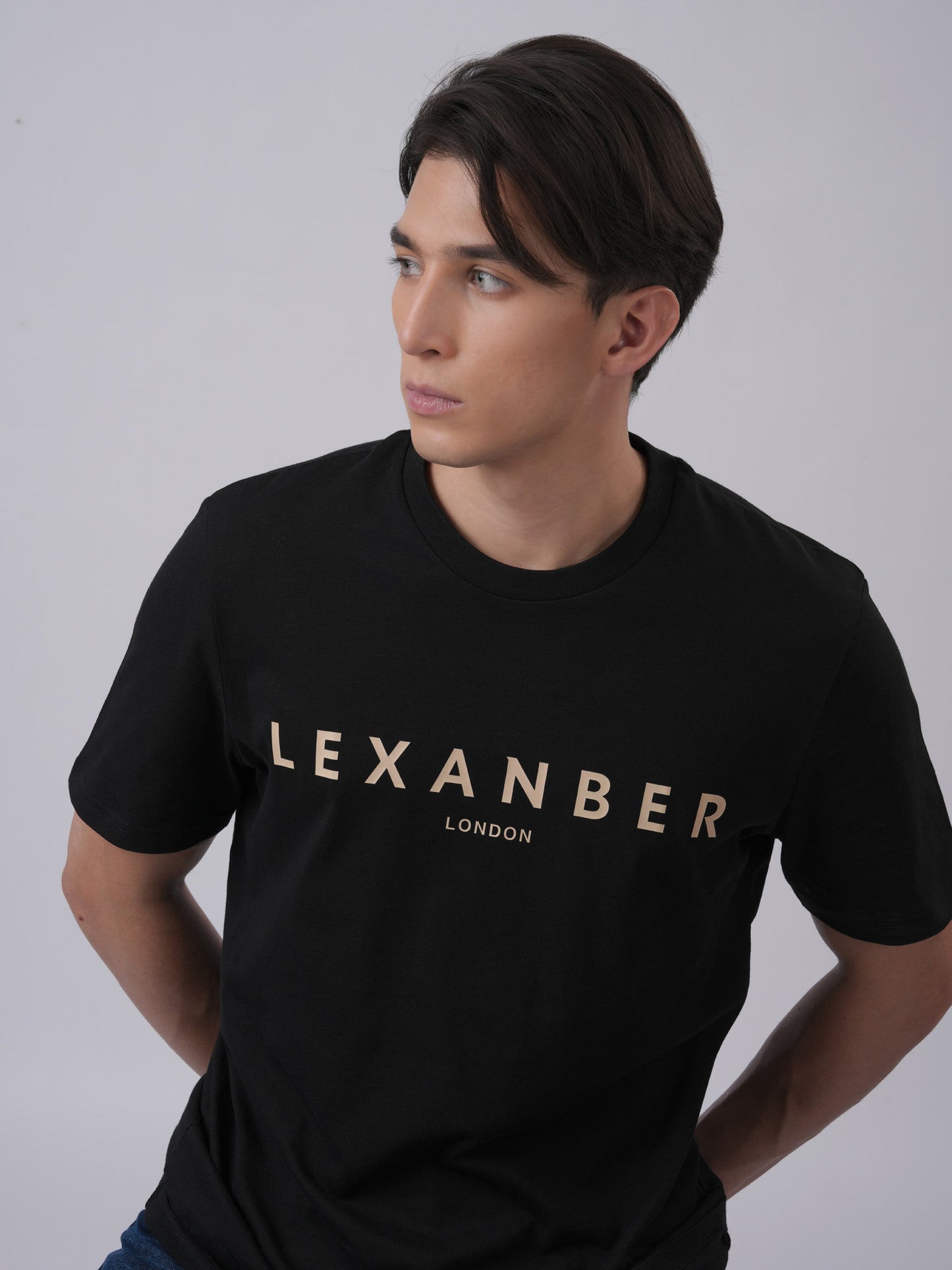
- 180–220 GSM — The premium sweet spot. Substantial, holds shape, drapes properly, breathes well. Every t-shirt in the Lexanber range — including the London Classic Logo Tee in Black and Olive Green, the New York Graphic Tee in White, and both the Cityscape Graphic Tee in Black and Burgundy — sits at 180 GSM, exactly in this range.
- 230–260 GSM — Heavyweight, "boxy" tees. Popular in modern streetwear (think the heavy oversized look). Excellent durability but warmer and stiffer.
- 270+ GSM — Ultra-heavyweight. Almost sweatshirt-territory. Specialty use only.
How to check it: Look in the product description, the fabric tab, or the spec sheet. If a brand doesn't disclose GSM, that's usually a sign it's below 160. Premium brands lead with this number because they're proud of it.
2. Cotton Type — The Yarn Matters More Than the Label
"100% cotton" tells you almost nothing. The yarn underneath that label is where premium and fast fashion separate.
There are two questions to ask:
Is it combed or carded? Combed cotton goes through an extra step that removes short, brittle fibres and impurities. The result is smoother, stronger yarn that pills less and softens with washing rather than degrading. Carded cotton is cheaper and rougher.
Is it ring-spun or open-end spun? Ring-spun cotton is twisted into a fine, dense yarn — softer to the touch, stronger under tension. Open-end (rotor) spinning is faster and cheaper but produces a coarser, weaker yarn.
The premium combination: Combed ring-spun cotton. This is what every quality-led tee uses.
The bonus markers:
- Organic cotton — grown without synthetic pesticides or fertilisers. Better for skin, soil, and farmers.
- Long-staple cotton — varieties like Pima, Supima, Egyptian, and certain organic strains have longer fibres, which mean smoother yarn and a softer finish.
Every Lexanber t-shirt — from the minimalist London Classic Logo Tee to the bolder, statement-print Cityscape Graphic Tee — is made from 100% organic combed ring-spun cotton, which is the textbook premium spec.
3. Knit Construction — Single Jersey, Done Properly
The knit pattern decides how the t-shirt drapes, breathes, and ages.
Single jersey is the gold standard for premium tees. It's a smooth, lightweight, single-layer knit that creates the classic t-shirt feel — soft on the inside, clean on the outside, breathable, with the right amount of stretch. Slub jersey adds texture; ribbed jersey is heavier and more structured. For a versatile premium everyday tee, single jersey is what you want.
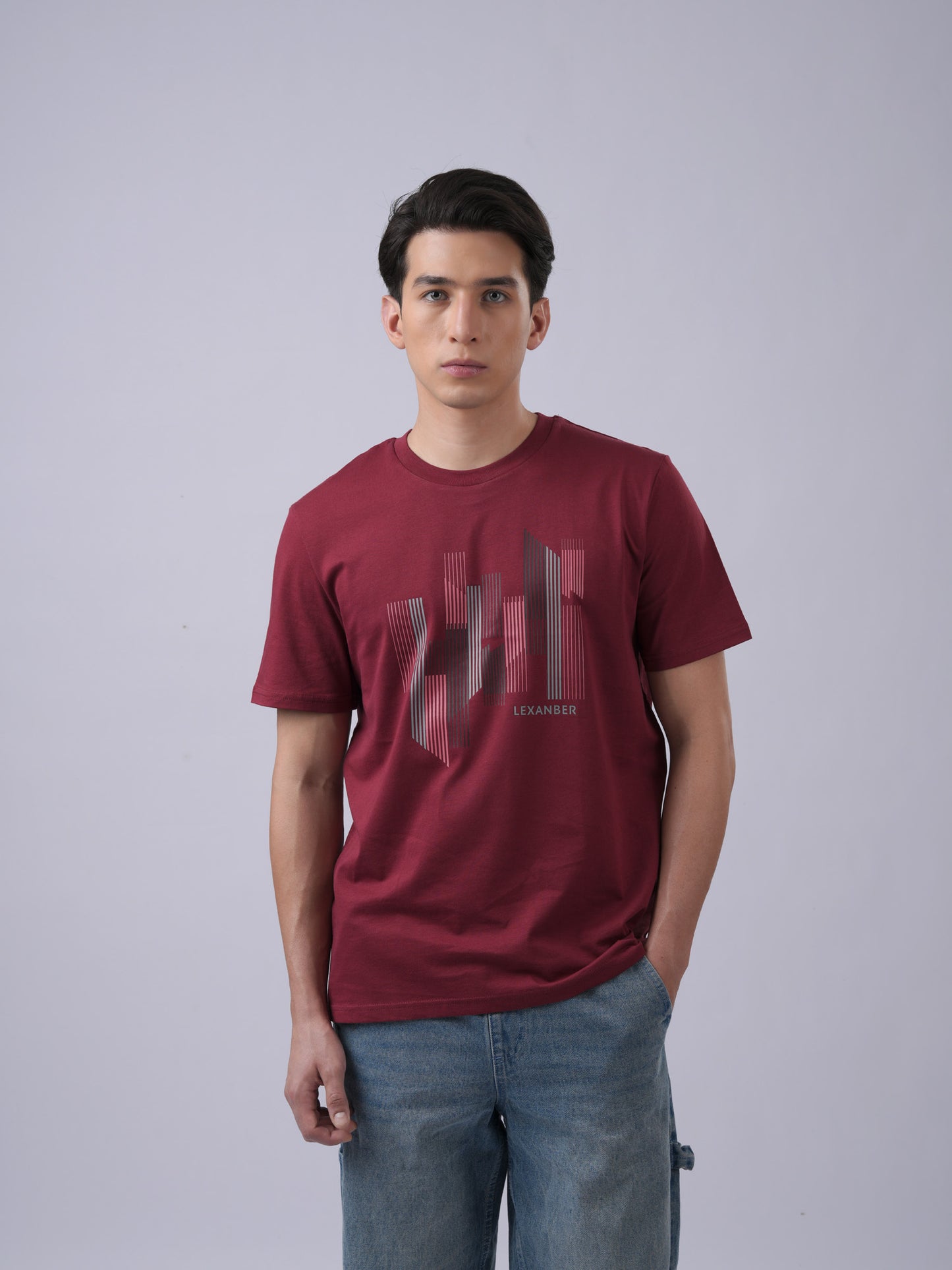
All five Lexanber tees are constructed in single jersey knit — the lightweight, breathable structure that lets a 180 GSM fabric stay year-round wearable.
The drape test (in-store): Premium single jersey falls in a clean, smooth line when held up. Cheap knits look stiff, lumpy, or wavy at the edges. If the t-shirt looks "tortured" on the hanger, it'll look the same on you.
Why thicker isn't always better: A heavy 240 GSM tee in a poor-quality knit will pill faster than a well-made 180 GSM tee. Construction matters more than gross weight.
4. Stitching — Where Brands Decide to Save Money (or Not)
Stitching is where cheap brands take the biggest shortcut, and where the failure usually starts.
What to look for:
- Twin-needle stitching on the sleeve cuffs, bottom hem, and neckline. Two parallel rows of stitching — instead of one — dramatically improve durability at stress points. Every Lexanber t-shirt uses twin-needle topstitching on both the sleeve cuff and hem.
- Tight, even stitches with no gaps, skipped threads, or loose ends.
- Reinforced shoulder seams. Some premium tees add a strip of tape along the shoulder seam to prevent stretching — known as shoulder taping or back neck taping.
- Set-in sleeves. Cheap tees often use a cap-sleeve or boxy construction; premium tees use a separately cut sleeve panel stitched into a properly shaped armhole (we'll cover this in Marker 6).
The pull test: Gently stretch a seam at the underarm. Premium stitching stays tight; cheap stitching shows visible gaps between threads or pulls white at the edges.
5. The Collar — The First Thing That Fails on a Cheap T-Shirt
If you've ever bought a t-shirt that looked great for a month and then developed a wavy, stretched-out, curling neckline — you've already learned this lesson the hard way.
Three details separate premium collars from disposable ones:
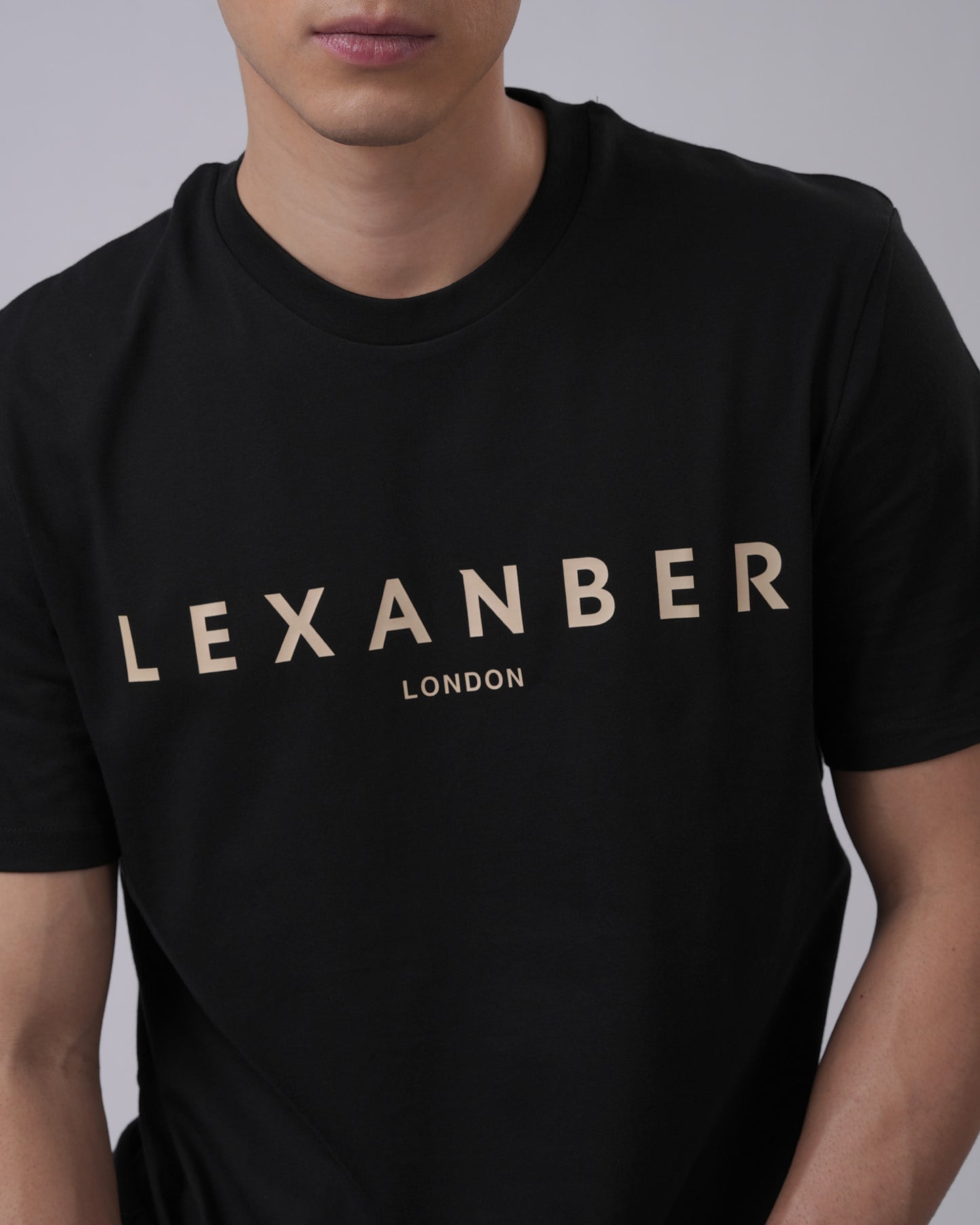
1. The rib structure. A 1x1 ribbed collar (one knit stitch, one purl stitch, alternating) is the premium standard. It's tighter, more elastic, and recovers its shape after wear. Cheap tees often use a basic banded collar with no ribbing — they look fine new, but stretch permanently after a few washes. Every Lexanber tee uses a 1x1 ribbed collar.
2. Neck tape (back neck binding). Premium tees use a strip of fabric — usually self-fabric (cut from the same material as the body) — sewn along the inside back of the neckline. This stabilises the collar, prevents stretching, and replaces the cheap, scratchy printed-on label nightmare. Look for the phrase "self-fabric inside back neck tape" in product descriptions — every Lexanber tee specifies this detail.
3. The collar finish. Run your finger along the inside of the collar where it meets the body. Premium construction is smooth and flat. Cheap collars have a visible ridge, loose threads, or rough binding that irritates the skin.
6. Cut and Tailoring — Set-In Sleeves and a Considered Fit
This is the marker most shoppers don't know to check — and the one that exposes the biggest quality gap.
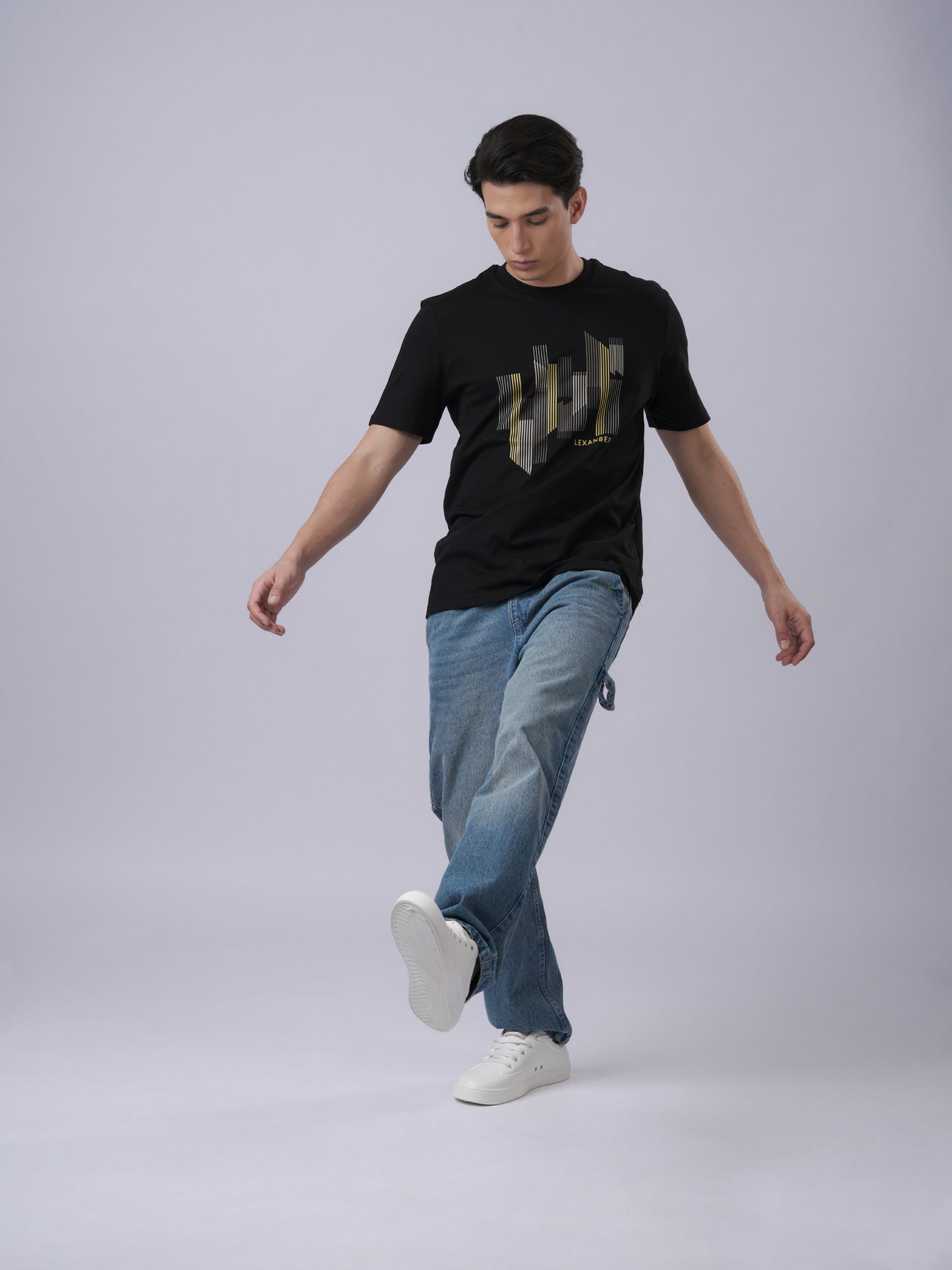
Set-in sleeves: Premium tees use set-in sleeves — the sleeve is cut as a separate panel and stitched into a properly shaped armhole. This gives a tailored, structured look and accommodates real shoulder anatomy. Cheaper tees use cap-sleeve or boxy constructions that don't sit right. All five Lexanber tees use set-in sleeves.
A considered regular fit. "Regular fit" can mean anything from boxy and shapeless to cleanly tailored. The Lexanber regular-fit pattern — applied across the London Classic, New York, and Cityscape ranges — is engineered for everyday versatility: not too tight, not too loose, with the right body length to tuck or wear loose. The model spec on every PDP confirms this (180 cm / 5'9" wearing size M).
Length and shape consistency: Hold the t-shirt up and check that the front and back hems are level, the sleeves are equal length, and the side seams are straight. Inconsistencies here are the smoking gun of low-cost manufacturing.
Size range matters. Premium brands grade each size individually rather than scaling one pattern proportionally. The Lexanber t-shirt range is graded across the full XS–XXL size run with a published size chart for each variant — the difference between a brand that designs for one body type and one that designs for many.
7. Certifications — The Proof Behind the Claim
The final marker is the one that converts marketing claims into verifiable facts.
Premium UK brands carry third-party certifications that audit their entire supply chain. These are the ones to look for:
- GOTS (Global Organic Textile Standard) — the strictest organic textile certification in the world. Audits the entire chain from seed to stitch, requiring at least 70% certified organic fibres and banning toxic dyes, heavy metals, and exploitative labour practices.
- OEKO-TEX Standard 100 — guarantees the finished product has been tested for over 1,000 harmful substances and is safe for direct skin contact. Critical for sensitive skin, children, and athletic wear.
- PETA-Approved Vegan — confirms no animal-derived materials (silk, wool, leather labels, bone buttons) are used in the product.
- BCI (Better Cotton Initiative) — an industry-wide sustainability framework focused on reducing water use, pesticide use, and improving farmer welfare.
- Fair Trade Certified — guarantees ethical wages and safe working conditions in the supply chain.
Every t-shirt in the Lexanber range carries the GOTS + OEKO-TEX Standard 100 + PETA-Approved Vegan trifecta — which is the highest level of verifiable ethical certification most UK premium streetwear brands offer.
The rule: If a brand makes sustainability or "premium quality" claims but lists no third-party certifications, treat the claim as marketing, not fact.
The Premium T-Shirt Checklist (Bookmark This)
Before you click "buy" on your next t-shirt, run through this:
| # | Check | Premium Standard | Lexanber Tees | Red Flag |
|---|---|---|---|---|
| 1 | Fabric weight (GSM) | 180–220 GSM | ✓ 180 GSM | Below 160, or not disclosed |
| 2 | Cotton type | Combed ring-spun, organic | ✓ 100% organic combed ring-spun | "100% cotton" with no detail |
| 3 | Knit construction | Single jersey, smooth drape | ✓ Single jersey | Lumpy, twisting, or stiff knit |
| 4 | Stitching | Twin-needle on cuffs and hem | ✓ Twin-needle topstitching | Single-row stitching |
| 5 | Collar | 1x1 ribbed + self-fabric neck tape | ✓ Both | Banded collar, printed label |
| 6 | Cut & tailoring | Set-in sleeves, graded sizing | ✓ Set-in sleeves, XS–XXL | Tubular, single-pattern grading |
| 7 | Certifications | GOTS, OEKO-TEX, PETA, BCI | ✓ GOTS + OEKO-TEX + PETA | No third-party certifications |
A t-shirt that ticks 5–7 of these is premium. One that ticks 0–2 is fast fashion, no matter what the brand calls itself.
The Five Lexanber Tees That Tick Every Marker
To make the seven markers concrete, here are the five Lexanber t-shirts that meet every single one:
- LEXANBER London Classic Logo Tee — Black — minimalist gold-printed London logo on a deep black base. The premium essential.
- LEXANBER London Classic Logo Tee — Olive Green — the earth-tone alternative. Same construction, year-round neutral colour.
- LEXANBER New York Graphic Tee — Crisp White — clean monochrome skyline print on a true white. The hardest colour to get right in cheap cotton; perfect in 180 GSM organic.
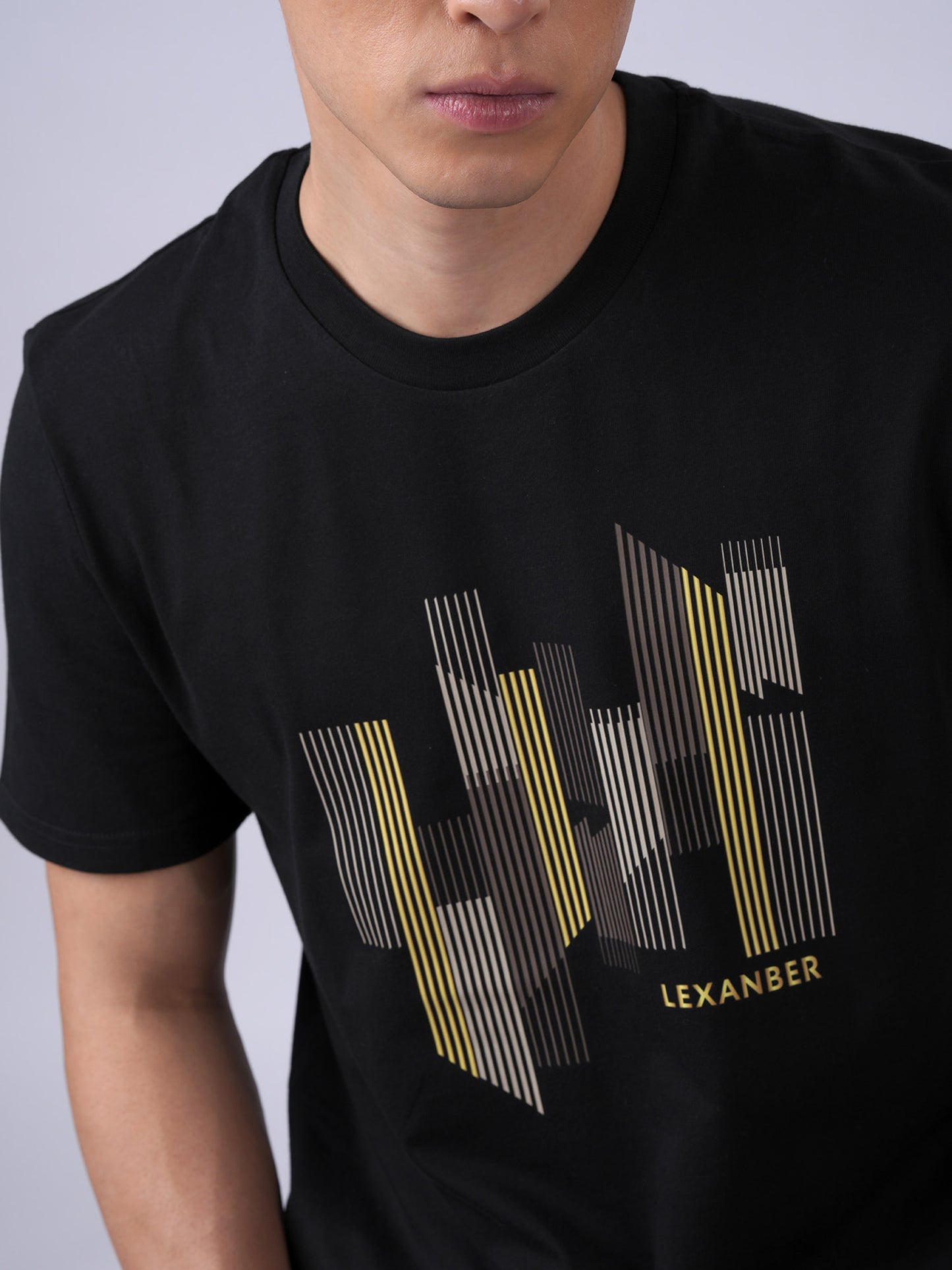
- LEXANBER Cityscape Graphic Tee — Black — bold abstract geometric print in gold and grey. Statement streetwear.
- LEXANBER Cityscape Graphic Tee — Rich Burgundy — the same modern graphic in a deep burgundy that pairs beautifully with denim, joggers, and overshirts.
All five are 100% organic combed ring-spun cotton, 180 GSM, twin-needle stitched, with 1x1 ribbed collars, self-fabric neck tape, and GOTS + OEKO-TEX + PETA certifications.
Frequently Asked Questions
What is the best GSM for a premium t-shirt?
The premium GSM sweet spot for everyday t-shirts is 180 to 220 grams per square metre. This range gives the t-shirt enough weight to hold its shape and drape properly, while staying breathable for year-round wear. Heavier 230 to 260 GSM tees are excellent for streetwear and oversized fits, but warmer to wear.
Is organic cotton actually better than regular cotton?
Yes, in three measurable ways. Organic cotton is grown without synthetic pesticides or fertilisers, making it gentler on the skin and far better for soil health and farming communities. It also tends to use longer-fibre cotton varieties, which produce softer, stronger yarn. The GOTS certification verifies these claims through independent auditing.
How can I tell if a t-shirt has tubular or side-seam construction?
Hold the t-shirt up and run your fingers down both sides of the body, from underarm to hem. If you feel a clear stitched seam on each side, it's side-seam construction (premium). If both sides feel completely smooth with no seam, it's tubular construction (cheaper, less durable, prone to twisting on the body).
What is combed ring-spun cotton?
Combed ring-spun cotton is cotton that has been processed in two premium ways. First, combing removes short, brittle fibres and impurities, leaving only the longest, strongest fibres. Second, ring-spinning twists these fibres into a fine, dense yarn that is softer to the touch and more durable under tension. Combed ring-spun cotton is the industry standard for premium t-shirts.
How long should a premium t-shirt last?
A well-made premium t-shirt — meeting the seven quality markers — typically holds its shape, colour, and structure through 80 to 120 wash cycles. With regular rotation, that translates to two to three years of frequent wear. A fast-fashion t-shirt typically loses shape and develops pilling within 15 to 25 washes.
What certifications should I look for on a t-shirt?
The most reliable third-party certifications for premium t-shirts are GOTS (Global Organic Textile Standard) for organic fibres and ethical production, OEKO-TEX Standard 100 for skin-safe testing, and PETA-Approved Vegan for cruelty-free materials. Brands that carry verified third-party certifications are publicly accountable for their claims.
Are heavyweight t-shirts always better?
Not necessarily. Heavyweight 240+ GSM t-shirts are excellent for durability and the boxy streetwear silhouette, but they're warmer to wear, slower to dry, and stiffer than mid-weight tees. For everyday year-round wear in the UK climate, 180–200 GSM remains the most versatile choice.
Final Word
A premium t-shirt isn't a luxury — it's a piece of engineering. Every detail above, from the 180 GSM fabric to the twin-needle stitching to the GOTS certification, is a deliberate decision by a brand that decided not to cut corners. Once you can read those signals on a product page, the £20–£24 spend stops looking expensive and starts looking obvious.
Want to see all seven markers in one place? Browse the Lexanber t-shirt collection — premium organic cotton, GOTS and OEKO-TEX certified, regular fit, sizes XS to XXL, free UK shipping and free returns.